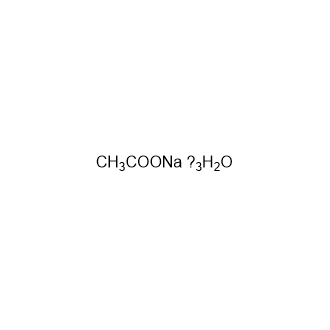
Sodium acetate trihydrate, meets analytical specification of Ph. Eur. BP USP FCC E262, ≤0.00002% Al


CAS No. : 6131-90-4

6131-90-4
Price and Availability of CAS No. : 6131-90-4
Size Price Stock
100g $30 In-stock
200 g Get quote
500 g Get quote
We match the lowest price on market.

We offer a substantial discount on larger orders, please inquire via [email protected]

or Fax: (86)21-58955996

Inquiry for price and availability only. Please place your order via our email or fax.

Cat. No. : HY-Y1325H
M.Wt: 136.08
Formula: C2H9NaO5
Purity: >98 %
Solubility: H2O : 175 mg/mL (ultrasonic)
Introduction of 6131-90-4 :

Sodium acetate trihydrate is a carboxylic acid and short-chain fatty acid (SCFAs). Sodium acetate trihydrate activates AMPK, increases ROS, cleaved caspase 9, PPARα, downregulates SREBP-1c, ChREBP expression. Sodium acetate trihydrate exhibits antifungal activity against Saccharomyces cerevisiae W303-1A. Sodium acetate trihydrate regulates energy metabolism. Sodium acetate trihydrate has anticancer activity against gastric cancer. Sodium acetate trihydrate induces writhing reaction and ulcerative colitis. Sodium acetate trihydrate can be used in the researches for gastric cancer, ulcerative colitis, hepatic steatosis, and pain[1][2][3][4][5][6][7][8][9]. In Vitro:Sodium acetate trihydrate (Acetic acid; 2-5 µM; 24 h) induces cancer cell-selective death in gastric cancer cells (RGK1) via oxidative stress, while having minor effects on normal gastric mucosal cells (RGM1)[3].
Sodium acetate trihydrate (Acetic acid; 20-200 mM; 200 min) induces programmed cell death in Saccharomyces cerevisiae W303-1A[4].
Sodium acetate trihydrate (Acetic acid; 5 mM; 15 d) suppresses the increase in disaccharidase activity (sucrase, maltase, trehalase, lactase) in Caco-2 cells without affecting cell growth or glucose transport[5].
Sodium acetate trihydrate (Acetic acid; 1.8-7.2 mM; 3 h) activates the AMPKα signaling pathway by consuming ATP to increase the AMP/ATP ratio in bovine hepatocytes, upregulating lipid oxidation genes, downregulating lipogenic genes, and reducing intracellular triglyceride content[6].
In Vivo:Sodium acetate trihydrate (Acetic acid; 0.56%; i.p.) significantly induces writhing responses in C57BL/6J mice[7].
Sodium acetate trihydrate (Acetic acid; 5% v/v; rectal instillation) induces ulcerative colitis in mice, causing weight loss, diarrhea, colonic inflammation, and tissue damage[8].

Your information is safe with us.